Whirlpool appliances last longer when you keep up the jobs the manual already assigns: cleaning the dishwasher filter and dryer lint screen, wiping refrigerator and washer seals, running the washer’s clean cycle, and keeping vents clear. Skip harsh chemicals and anything that needs a panel off. The use-and-care manual for your model sets the schedule.
Whirlpool appliances last longer when the jobs they already ask you to do get done — not when you add extra chemistry. A dishwasher filter, a dryer lint screen, a refrigerator gasket, and a front-load washer boot are the four pieces that collect the household’s dirt. Ignore them and the machine starts looking “broken” while the failed part is still healthy.
Use the use-and-care book for your model. If a cycle or a part is not listed as user-serviceable, it is not a weekend project.
Which maintenance jobs extend the life of Whirlpool appliances?
Clean the dishwasher filter and dryer lint screen, wipe refrigerator and washer seals, run the washer’s clean cycle, and keep vents clear.
| Symptom |
What it can point to |
What you can safely check |
| Gritty dishes, odor from the dishwasher |
Loaded filter |
Rinse the filter with a soft brush |
| Musty smell from the washer |
Moisture and residue in the drum and door seal |
Run the Clean Washer cycle and leave the door ajar afterward |
| Longer dry times |
Lint in the screen, hose, or vent |
Clean the screen; clear the exterior vent as the manual describes |
| Warm air leaking into a refrigerator |
Dirty or worn door seal |
Wipe the gaskets with mild soap and warm water and test the seal |
| Refrigerator running constantly or louder |
Blocked vents, or dust at the coils on models that call for cleaning |
Keep interior vents clear and follow the manual for coil care |
| Arcing or sparks inside a microwave |
Soil on the waveguide cover or door contact area |
Wipe the cavity and cover; do not run it empty |
The jobs that pay off
Dishwashers: twist out the tub filter and rinse it. Dryers: clean the lint screen every load and glance at the exterior vent flap. Refrigerators: wipe door gaskets and keep interior vents visible. Washers: wipe the door boot, leave the door ajar, and measure detergent instead of guessing.
Microwaves: wipe splatters so they do not carbonize on the waveguide cover. Hoods: wash grease filters before they become cardboard. None of that requires a panel screwdriver.
How often should you run the Clean Washer cycle?
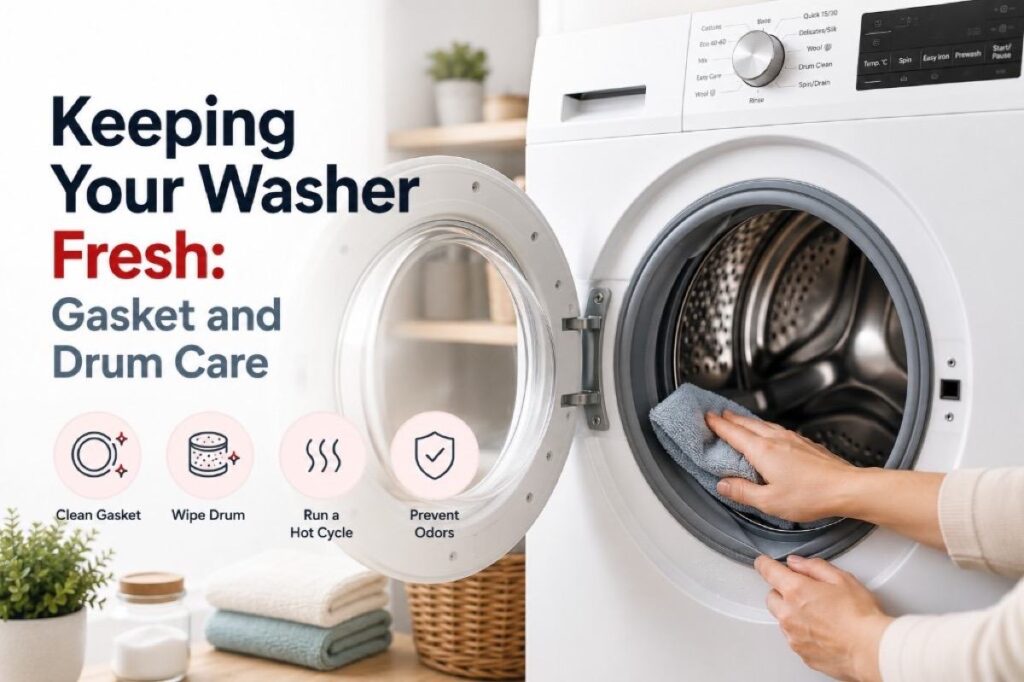
Whirlpool says to run the Clean Washer cycle at least monthly or every 30 wash cycles. Put an affresh tablet at the bottom of the basket, not in the dispenser, or use 1 cup of liquid chlorine bleach, and add no detergent. Leave the lid or door open afterward. Do not use thickened or no-splash bleach, since it creates excess suds, and more bleach than the manual specifies could damage the washer over time.
Use only HE detergent in high-efficiency washers. Door seal care is similar: wipe the seal and door dry after a load, leave the door ajar, and pull the seal back occasionally to look for lint or foreign objects.
Refrigerator and dryer upkeep
Whirlpool’s preventative maintenance guidance for refrigerators is practical: clean the interior and wipe the gaskets with warm water regularly, check the water filter and replace the air filter every six months on models that have them, and inspect door seals for air leaks and confirm the cabinet is level once a year. Coil cleaning is only for models whose manuals call for it, and some are technician-only. Intervals vary between Whirlpool’s own pages, so follow your model’s manual.
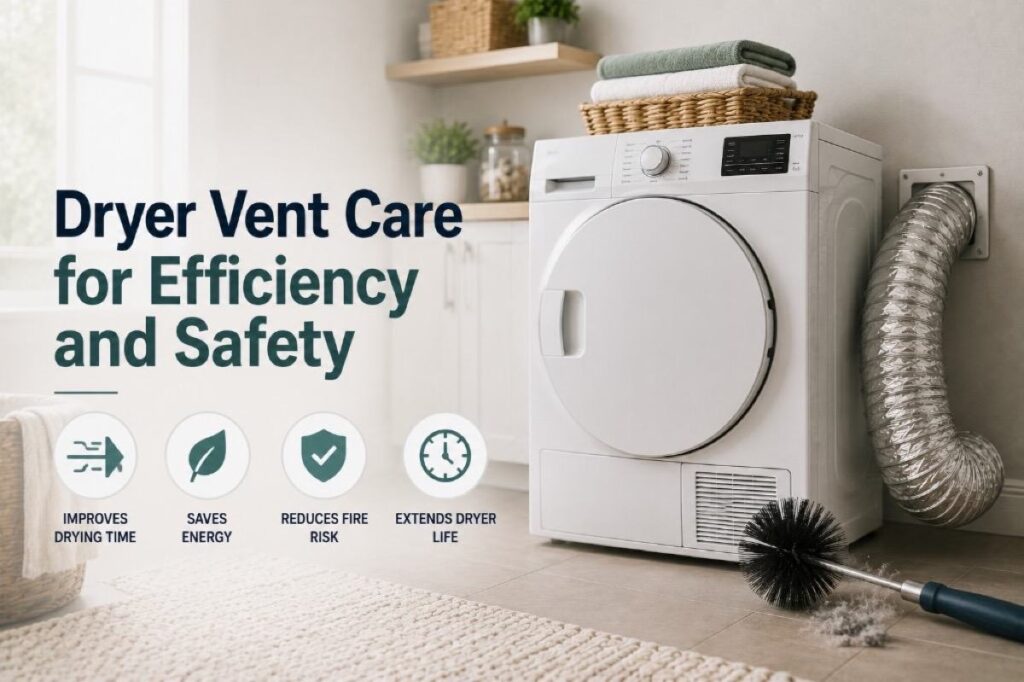
For dryers, the screen is only the first stop. One Whirlpool page says the vent to the outside should be cleaned every 1 to 2 years, or sooner if drying performance drops. Also check that the exterior hood opens when the dryer runs.
What to stop doing
Do not run a dishwasher without the filter “to see if it drains better.” Do not finish a dryer load with the screen on the counter. Do not coil a dryer hose into a tight loop behind the cabinet. Do not pour drain cleaner into a washer pump.
Descalers, tub-clean tablets, and glass-ceramic creams are fine when the manual names them. Abrasive pads on a cooktop, oven-door gaskets, and microwave door mesh are how you create the next leak or arcing complaint.
The manuals show the same restraint throughout. Do not line an oven bottom with foil or a liner, since that can permanently damage the finish. Do not use abrasive pads or steel wool where the manual says to avoid them, and do not use more cleaner than the label says. More chemistry is not more maintenance.
A calendar, not a feeling
Put filter rinses on the same mental shelf as taking out trash. Waiting until glasses come out gritty or jeans need two dryer cycles means the restriction has already been working overtime. If a smell, leak, or error continues after the user parts are clean, that is a diagnosis, not a more aggressive cleaner. Ask of each job what it prevents: a dishwasher filter protects the pump, a clean vent protects the dryer, and a clean seal keeps the refrigerator from working harder than it should.
Common questions
How often should I run the washer’s clean cycle?
Whirlpool says at least once a month or every 30 wash cycles, whichever fits your use. Leave the door or lid open afterward so the drum can dry.
Can I use bleach or a tablet for washer cleaning?
Either one, but not both, and the manual specifies the amount and where it goes. A tablet goes at the bottom of the basket and plain liquid chlorine bleach is measured by the cup. Never use thickened bleach, and do not add detergent.
Do I really need to clean refrigerator door seals?
Dirty gaskets can keep the door from sealing, and Whirlpool lists wiping them as monthly upkeep. One test described for some models is to close a bill in the door and see whether it pulls out with little resistance.