A fresh-smelling Whirlpool washer mostly depends on three habits: use only HE detergent in a measured amount, wipe the door boot and leave the door ajar between loads, and run the clean-washer cycle the manual describes. If the odor returns after that, or water is standing in the tub or leaking at the door, the problem has moved from cleaning to repair.
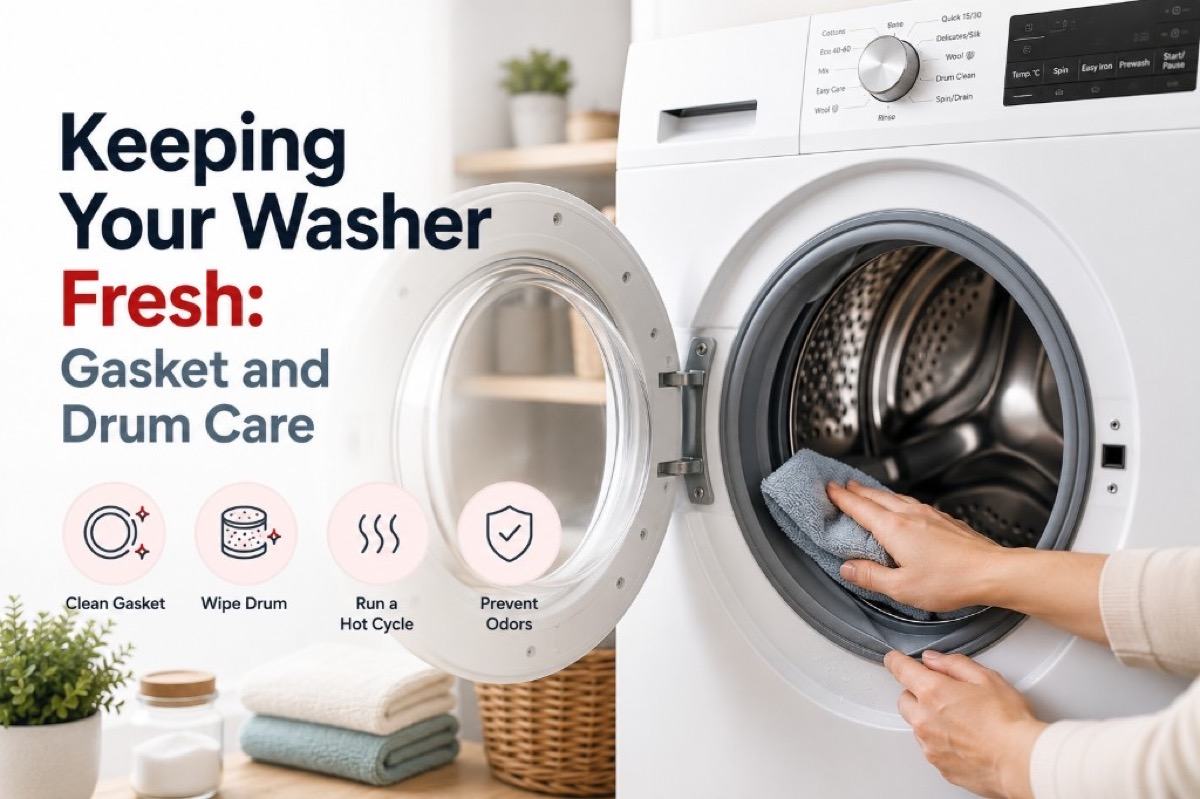
The rubber door boot on a front-loader is a gutter. Hair, coins, and leftover suds sit in the folds. Close the door after every load and you grow a biology experiment. Top-loaders have their own version in the lid area and dispenser, but the boot is the usual complaint.
Use HE detergent and less of it than the cap suggests if you wash in cold water with small loads. Extra soap does not get clothes cleaner; it stays in the machine.
Why does a washer hold on to odor?
A washer is wet inside after every load, and the places that stay wet longest grow the smell. On a front-loader that is the folds of the rubber door boot and the dispenser drawer area. On a top-loader it is the lid underside, the dispenser and the rim around the basket. Detergent residue gives that moisture something to feed on, which is why more soap makes the odor worse rather than better.
Whirlpool’s guidance says to use only HE detergent in an HE washer, because non-HE detergent or too much of it creates suds that can cause leaking, drainage problems and poor rinsing. It also suggests running a warm or hot wash now and then instead of cold every time, leaving the lid or door open between uses, and unloading promptly so wet laundry does not sit in the drum.
How do you keep the washer door boot from smelling?
After a load, wipe the boot dry, including the hidden fold at the bottom. Leave the door and dispenser cracked until the next day. That single habit prevents more odor calls than any tablet.
| Symptom |
What it can point to |
What you can check |
| Musty smell when the door opens |
Moisture and residue in the boot folds or dispenser |
Wipe the boot and glass dry, leave the door ajar, and run the clean-washer cycle |
| Slimy film or dark spots in the boot |
Soap and lint building up where water pools |
Pull the boot back gently and wipe the fold; look for lint, a sock or other small items hiding there |
| Suds still visible late in the cycle, clothes not rinsing well |
Too much detergent, or detergent that is not HE |
Switch to HE detergent and reduce the amount |
| Water on the floor near the door |
A torn or poorly seated boot, or suds pushing out |
Check the boot for splits and the detergent amount; stop using the washer if it keeps leaking |
| Water still sitting in the tub after the cycle |
A drain problem rather than a freshness problem |
Clean the accessible pump filter if your model has one, then book diagnosis |
Detergent math and the clean cycle
Run the tub-clean or steam-clean cycle the manual describes, with the product it names. Do not mix random bleach, vinegar, and tablets in the same afternoon. If the boot is already stained and slimy, cleaning helps; a torn boot that leaks is a different repair.
How often should you run the Clean Washer cycle?
Whirlpool’s published instructions call for running the Clean Washer cycle at least monthly or after about 30 wash cycles, with no laundry and no detergent. A cleaning tablet goes at the bottom of the basket rather than in the dispenser, or the manual may name a cup of liquid chlorine bleach instead. Leave the lid or door open afterward so the drum can dry.
Thickened, easy-pour or no-splash bleach is not suitable because it creates excess suds, and using more bleach than the manual specifies can harm the washer over time. Steam models behave differently: the steamer phase runs early in the cycle with no drum spin or fill, and condensation on the door window or a tablet that has not yet dissolved during that phase is normal.
Some manuals also describe a monthly deep clean of the door seal with a diluted bleach solution, wiped dry afterward, along with a look under the folds for lint or foreign objects. Because those mixing instructions vary by model, use the ratio printed in your own manual and never combine bleach with other cleaners.
When is a washer problem not about freshness?
A growl that rises with spin, a leak onto the floor, or a door that will not lock is not solved with leaving the door open. Stop using a leaking washer. Odor plus a failed drain is two problems; clean the accessible filter if your model has one, then book drain diagnosis if water still sits in the tub.
Front-loader and top-loader habits
The boot is a front-loader issue, but a top-loader is not exempt. On a top-loader, leave the lid up after the last load and wipe around the lid opening and the dispenser, since that is where moisture and detergent collect. Some select models also offer a dry-drum feature that uses a fan to pull moisture out of the drum, gasket and door; if yours has one, the manual explains when to use it.
A smell that returns within a few loads even after the cycle and a dry boot is worth treating as a sign of something else, such as a drain that is not clearing completely. At that point repeat cleaning is not the answer.
Common questions
How often should I run the clean cycle on my Whirlpool washer?
Whirlpool’s published guidance says at least monthly or after about 30 wash cycles, but the manual for your model is the final word. Use the product it names and leave the door open afterward.
Why does my front-load washer smell even though the clothes come out clean?
Odor usually comes from moisture and residue in the boot folds and dispenser rather than from the laundry itself. Wipe the boot dry after loads, keep the door ajar, and cut back on detergent.
Can I put the tablet in the detergent drawer?
The published instructions place the tablet at the bottom of the basket, not in the dispenser. Check your manual, since the steps can differ between top-load and front-load models.