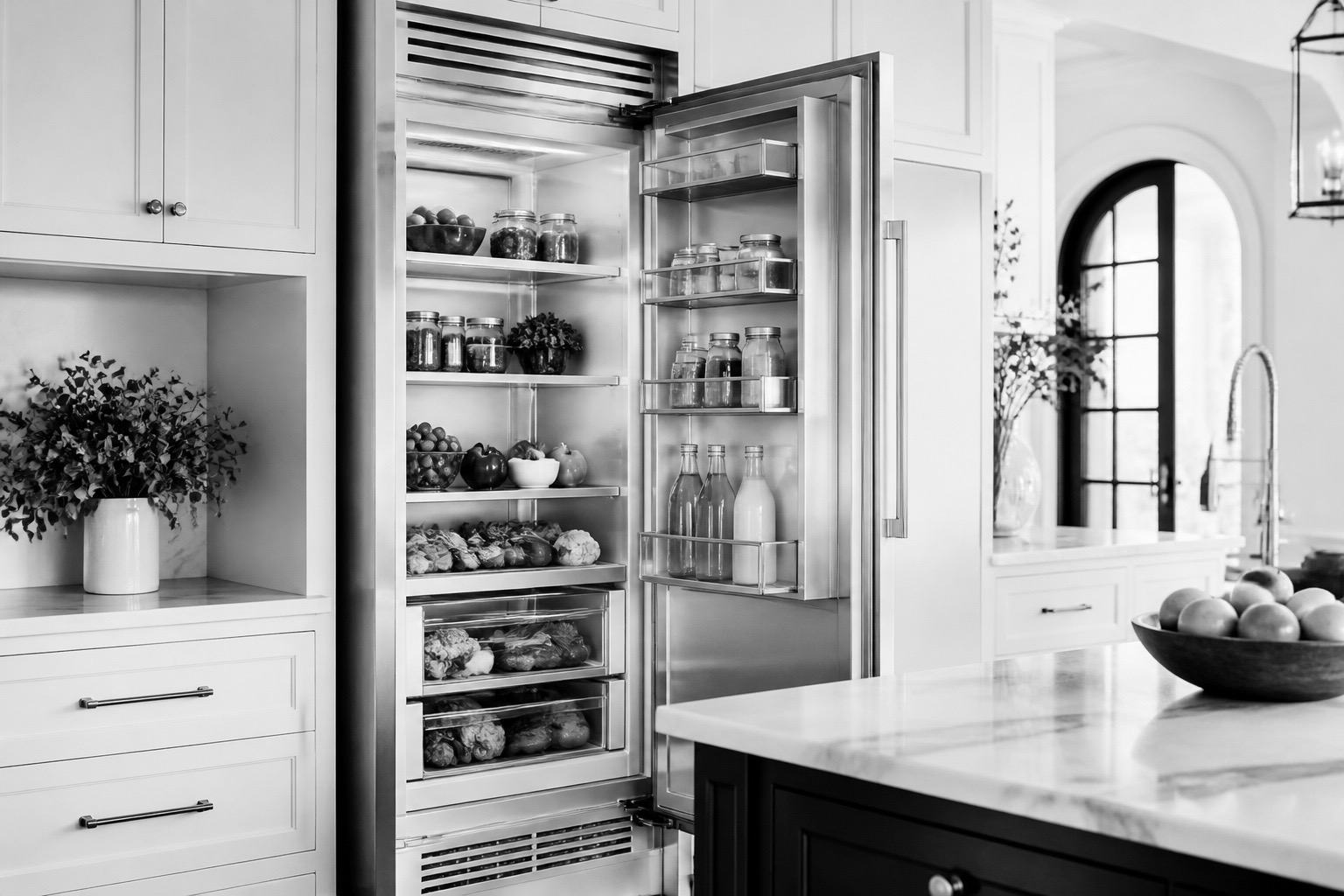
A Whirlpool refrigerator that is not cooling is often a placement, airflow, or door-seal issue before it is a failed part. Check the controls, keep the interior vents clear, and make sure both doors close and seal. If food stays warm after that, or one section is warm while the other is fine, note which one and book a visit.
When a Whirlpool refrigerator stops keeping food cold, the useful question is not “is it broken?” It is “which climate failed?” The freezer and the fresh-food section share a box, but they do not always fail together. That split decides whether you are looking at a door that is not sealing, a blocked vent, a defrost problem, or something that belongs to a technician with gauges.
Leave the food where it is if the freezer is still near freezing. Unplugging the cabinet to “reset” it warms groceries and only tells you whether frost melts — which you already suspected.
Why is a Whirlpool refrigerator not cooling?
Check placement, airflow, the controls, and the door seals first. Note whether the freezer, the fresh-food section, or both are warm before you book.
| Symptom |
What it can point to |
What you can safely check |
| Whole cabinet warm after a power blip |
Controls reset or bumped |
Check the settings and give the unit time to recover |
| Fresh-food warm, freezer cold |
Air not reaching the fresh-food section |
Clear the interior vents and check the damper area for obstructions |
| Warm only after a big grocery load |
Warm food and door openings raising temperature |
Leave the doors closed and allow several hours to stabilize |
| Door pops back open or looks loose |
Seal not closing |
Clean the gasket and test several spots |
| Warm in a unit near the stove or in a tight alcove |
Heat or a blocked base grille |
Check the installation clearances in the manual |
| Both sections warm, compressor area silent for long stretches |
System-level cooling loss |
Do not open anything; note the model and book a visit |
Warm groceries vs. a warm freezer
Open both doors and pay attention to what you stored, not the sheet-metal sides of the cabinet. Condenser heat on the exterior can feel warm on a healthy refrigerator. Milk that has gone tepid while ice cream is still hard often means air is not moving from the freezer into the fresh-food section, or a damper is stuck.
If both sections are clearly warm and the compressor area is silent for long stretches, treat that as a system-level cooling loss. Do not pull the rear cover or tap refrigerant lines.
What room conditions does a Whirlpool refrigerator need?
Whirlpool gives an operating range of 55 to 110 degrees Fahrenheit for the room, and it says not to install a refrigerator near an oven, a radiator, or another heat source, behind a cabinet door, or with the base grille blocked. A cabinet that is crowded into a hot spot can fall behind even if it is mechanically healthy.
Time matters too. A newly installed unit needs 24 hours to cool, and the guidance is to wait at least 24 hours between control adjustments. Turning the dial colder every few hours makes it hard to tell what actually helped. The factory preset is a mid setting, so return to that before experimenting.
Confirm the controls were not bumped warmer after a power blip. Make sure doors latch and that a cereal box is not blocking the interior vents on the freezer back wall. Wipe the door gaskets; crumbs on the magnet keep warm room air in the cabinet all day.
Large loads of warm food and frequent door openings warm the cabinet, and Whirlpool says it can take several hours to stabilize. Keep the doors closed and keep food away from the air vents during that stretch.
Look at the floor in front of the refrigerator. A puddle can be a defrost drain that iced over, a water-filter housing, or a broken supply line to the ice maker. Those leaks can look like “the fridge died” when the real story is water where it should not be.
How do you test a refrigerator door seal?
Some Whirlpool freezer pages describe a quick seal test. Close a dollar bill in the door, and if it pulls out with little resistance, the door may not be sealing. Try several spots around the gasket, and clean it with mild soap and warm water first.
Coils collect dust on models that call for cleaning, which makes the cooling system work harder. Many Whirlpool refrigerators do not need it, and some can only be cleaned by a technician. Where your manual describes it, power is cut first, only the grille area is vacuumed with a soft brush, and fins and water lines are left alone. The recommended interval differs between Whirlpool pages, so the manual for your model decides it.
When is cooling loss a reason to book?
Frost that returns a day after a manual thaw, a grinding fan, or temperatures that never recover after you cleared the vents are past homeowner care. Write down whether one section or both failed, how long food has been at risk, and any message on the display. Bring the model number from the tag inside the fresh-food compartment — usually on the wall or in the crisper frame.
What do refrigerator over-temperature alerts mean?
Some Whirlpool models raise an over-temperature alert when the refrigerator or freezer stays too warm for a while, and some show a code after an outage. Those alerts vary by model and are not a diagnosis. If the display flashes the letter F, one documented step is a power reset by turning the breaker off or unplugging for about a minute, then watching the display. If it comes back, that goes on the note for your visit.
Common questions
How long should a new refrigerator take to get cold?
Whirlpool says to allow 24 hours for a newly installed unit to cool, and to wait at least 24 hours between control changes so you can see what each change did.
Can a warm room stop a refrigerator from cooling?
It can. The documented operating range runs from 55 to 110 degrees Fahrenheit, and the cabinet should not sit near an oven or radiator, behind a cabinet door, or with the base grille blocked.
Is it normal for the outside of the refrigerator to feel warm?
Some warmth on the exterior can be normal, since heat has to leave the cabinet. What matters is the temperature of the food inside and whether one or both sections are warming.