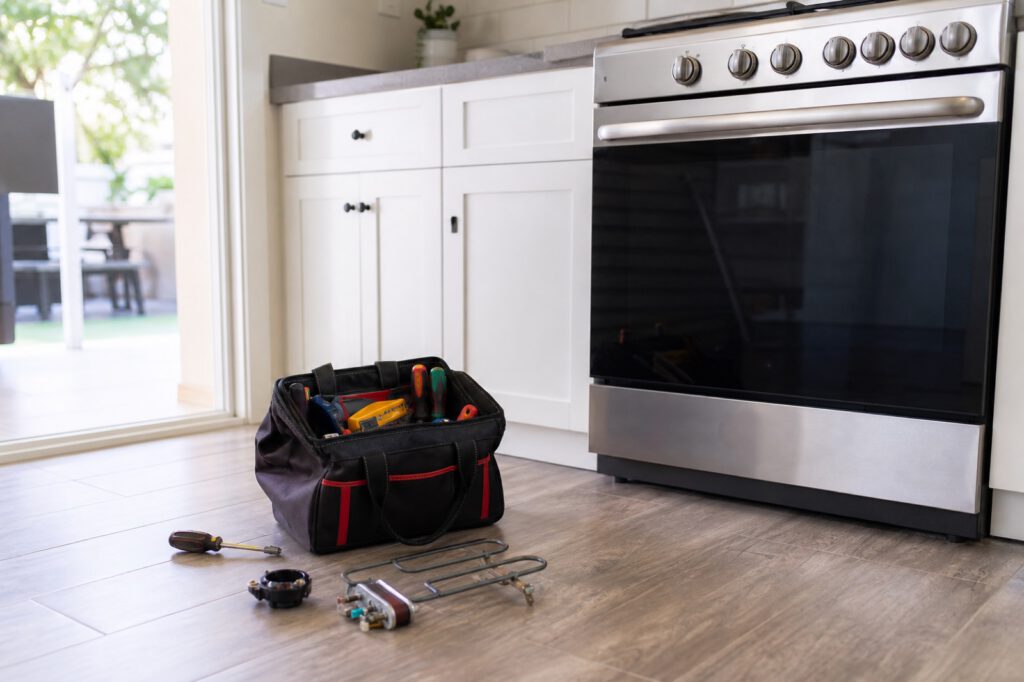
A Whirlpool service visit pays for a technician to reach the appliance, confirm the complaint, and test the system behind it. What you owe depends on how the visit fee relates to a repair, whether you approve the estimate, and whether a part has to be ordered, so ask those three things when you book.
You are paying for a technician to get to the appliance, confirm the complaint, and run the tests that match that Whirlpool product — temperatures on a refrigerator, drain path on a dishwasher, heat versus vent on a dryer. If the part is in the van and you approve the estimate, the repair may finish in the same stop. If the part has to be ordered, the first visit ends with a diagnosis and a plan.
Ask, when you book, how diagnosis relates to repair if you say yes, and what you owe if you say no. That conversation belongs on the phone, not after the kickplate is off.
What shapes the bill on a Whirlpool service visit?
The bill depends on how the visit fee relates to a repair, whether you approve the estimate, and whether a part has to be ordered.
| Part of the visit |
What it depends on |
What you can do before booking |
| Diagnosis |
The appliance type, how many systems have to be tested, and whether the fault shows up while the technician is there |
Describe when the problem happens and which cycle or setting was running |
| Parts |
The exact model and serial, and whether the part is stocked or has to be ordered |
Have the model and serial ready so the right part is looked up |
| Labor and access |
Whether the appliance slides out, sits in a tall cabinet, or has to be unmounted |
Clear the floor and the path to the appliance |
| A second visit |
Whether the diagnosis points to a part that is not on hand |
Ask what happens to the first visit’s charge if you go ahead with the repair |
| Declining the repair |
The terms stated when you booked |
Ask what you owe if you say no, and get the answer before the visit |
| Warranty or service plan |
The paperwork that came with that specific appliance |
Look it over first; terms differ by model and by purchase |
What the visit is for
Access, a working outlet or gas supply as applicable, and a chance to see the fault. Intermittent problems are harder; notes about when it happens are worth more than restarting the appliance ten times before we arrive.
Intermittent faults deserve a short note here. A dryer that loses heat only on large loads, or a refrigerator that warms up overnight, may behave perfectly while the technician is in the room. The more precisely you can describe the pattern, the less of the visit goes to waiting for the problem to appear.
Questions worth asking when you book
- Does the visit fee apply toward the repair if you approve it?
- What do you owe if you decline after the diagnosis?
- Will the estimate be given before any part is installed?
- If the part is not on the truck, what does the second visit involve?
- Does anything in your warranty or service plan apply to this model?
Those five questions turn a vague appointment into one with stated terms. A clear answer is a good sign; an answer that avoids the question is worth noting before anyone arrives.
What should you do before the technician arrives?
Clear the floor in front of the machine. Empty a dishwasher or washer if you can do it safely. Have the model and serial ready. Secure pets. If the appliance is in a locked laundry room, be there with the key.
Why the symptom changes the visit
The same word, “broken,” covers very different work. Whirlpool’s own support pages list several likely causes for a dishwasher that will not drain: a clogged filter, debris in the sump, a kinked or sagging drain hose, a blocked disposal connection, or a jammed drain pump. A technician working through that list is checking the cheap, reachable items before condemning the pump, which is why the diagnosis step is not a formality.
Dryers follow the same logic. A dryer that does not heat can be a restricted vent rather than a failed part, and a blocked vent is described on the manufacturer’s pages as a fire hazard, so the vent gets looked at before anything is replaced. Refrigerators add another layer, because a warm compartment may come from airflow, door seals, or placement rather than the cooling system itself. Each of these paths takes different time and different parts, which is why a flat price for “a Whirlpool repair” cannot be quoted in advance.
What happens after the diagnosis?
You get a recommended repair and a price. Approve, decline, or choose replacement. Nothing about that sequence requires you to decide in ten seconds, and nothing about it is a same-day guarantee that a rare part will appear in the driveway.
When does a repair need a second visit?
Sometimes the cause is clear but the part is specific to the model and has to come from a warehouse. In that case the first visit ends with a diagnosis, a written plan, and a decision for you. A second visit to install the part is normal, not a sign the first one failed. What matters is that the estimate, the part, and the return arrangement are all stated before you agree.
If something unexpected turns up while the appliance is open, such as a second failed component, the plan changes and you should hear about it before the extra work starts. You can always pause and decide again.
Frequently asked questions
Do I have to pay if I decide not to repair the appliance?
That depends on the terms you were given when you booked, which is why the question belongs on the phone call. Ask what the diagnosis covers and what you owe if you decline, and hold the visit to that answer.
Can a technician quote the full repair price over the phone?
Not reliably. A symptom like “not cooling” or “not draining” has several possible causes, and the price depends on which one the tests find. Expect a written estimate after diagnosis, before any part is installed.
What should I have ready for the appointment?
The model and serial number, a clear path to the appliance, and notes about when the problem shows up. Empty a dishwasher or washer first if you can do it safely, and secure pets so the visit is not interrupted.