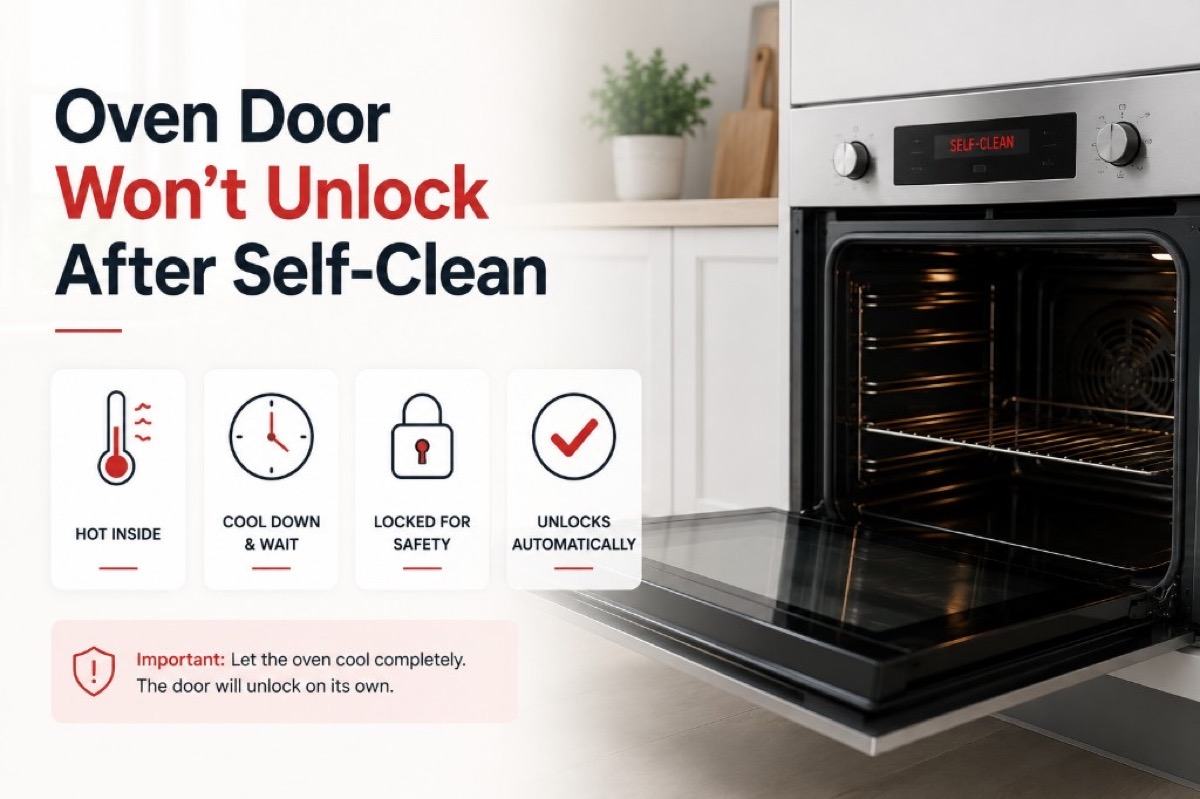
An oven door that stays locked after a self-clean usually means the oven has not cooled enough for the lock to release. Leave the door alone, let the cavity cool, and look for a lock indicator on the display; if it stays locked after the oven is cool, book a visit.
Self-clean heats the cavity far past baking temperatures and locks the door on purpose. The control will not release that lock until it believes the oven is cool. The kitchen may feel fine while the cavity is still hot. Waiting is the first repair.
If you smell a strong electrical odor or see smoke that is not leftover food, leave the oven off and treat it as a stop-use event — still without prying the door.
Why is the oven door still locked after self-clean?
Whirlpool Product Help says the door locks a few seconds after a self-clean starts and will not unlock until the oven has cooled to about 200 F. The cycle time shown on the control also includes a built-in cool-down, so the clean cycle can finish before the lock lets go. The door must be fully closed before the cycle will start at all.
| Symptom |
What it can point to |
What you can safely check |
| Door locked with the lock light on |
The oven is still above the release temperature |
Wait; the lock light goes out when the control allows it |
| Door locked after a power interruption |
A cycle that did not resume |
Check the display, then use the manual’s steps for your model |
| Heavy smoke, strong odor, or an electrical smell |
Soil burning off, or a fault |
Ventilate and stop the cycle; leave the door closed |
| Cycle will not start |
A door that is not fully closed |
Close the door fully and make sure nothing blocks it |
| Lock never releases on a cool oven |
A latch or control fault |
Do not force the door; arrange a visit |
| Gas smell near the oven |
A gas safety concern |
Follow the gas safety steps below, not oven steps |
Is it normal for the oven door to lock during self-clean?
That click at the start of the cycle is the latch. It is working. The display may show a lock icon long after the clean cycle’s clock has finished because cool-down is a separate phase. Oven controls differ, so the wording of the lock message on your display depends on the model.
What happens before and during the clean
Preparation changes how the cycle behaves. The manual tells owners to remove racks, pans, and foil, to hand-clean the door edge and the frame area, and not to clean or move the door gasket. Heavy soil can mean a longer cycle and more smoke, so a very dirty oven may stay locked longer than a lightly soiled one.
Normal effects of a self-clean cycle on a porcelain interior include discoloration, loss of gloss, hairline cracks, and popping sounds. Fumes from the cycle can also harm certain pet birds, so Whirlpool suggests moving them to a closed, well-ventilated room away from the kitchen.
How long should you wait for the oven to cool?
Give the oven hours, not minutes, especially after a long clean. Do not run the cooling fan “trick” by forcing bake if the control is still in lockout. Opening windows helps you, not the latch thermometer.
Can you reset the oven control if the door stays locked?
If the control looks stuck after a power interruption, the manual describes one reset: switch the oven’s breaker off for about a minute and restore it. Use it once, only after the oven has cooled, and never to try to defeat the lock. A power reset does not unlock a hot oven. A lock that releases after a reset tells you the control was confused, not that every part is sound, so mention it if the problem returns.
Why the exact model matters
Self-clean works differently across Whirlpool ovens. The traditional cycle uses very high heat, while some models also offer a lower-heat clean, and the lock and cool-down behavior can differ between them. Before judging a lock as stuck, read the self-clean section of the use-and-care manual for your oven and see which cycle you ran.
Control layouts and wording vary as well, so matching what you see on the display to the manual is the quickest way to separate a lock that is simply waiting from one that is genuinely stuck, before anyone suspects the latch.
When does a locked oven door need a technician?
If the oven is fully cool to a thermometer in the cavity — door still closed — and the lock has not moved, the latch or the control is stuck. That is a technician job. Forcing the door bends the oven and the kitchen cabinet. Gas ovens follow the same rule; adding “I smelled gas” means you stop and ventilate rather than keep cycling power.
If you smell gas
For a gas range, a gas smell is a safety matter, not an oven problem. Do not light anything, avoid switches and phones inside the home, leave the area, and call the gas supplier or fire department from outside. Gas can be present without a noticeable smell, so many manuals recommend a gas detector approved for home use.
Common questions
How long does an oven stay locked after self-clean?
It stays locked until it drops to about 200 F, and the cycle time includes a cool-down phase. How long that takes depends on the model and on how dirty the oven was, so rely on the lock light rather than a clock.
Can I force the oven door open?
No. Forcing a locked door can bend the door and damage the latch and the cabinet. Wait for the lock to release, and if it never does on a cool oven, book a visit.
Is the smoke during self-clean normal?
Some smoke from burned-on soil is normal, especially after heavy use, and ventilation helps. A strong electrical smell or smoke that does not look like food is different, so turn the oven off and stop using it.