Stay out of anything behind a screw-on panel: live electrical parts, gas connections, sealed refrigerant systems, and the high-voltage section of a microwave. Filters, lint screens, and door bins are meant for owners, and the manual for your model names what else is. If you smell gas, see damaged wiring, or have a breaker that keeps tripping, stop and book instead of probing.
Whirlpool appliances are designed so a few parts come off without tools: dishwasher filters, dryer lint screens, some hood grease filters, refrigerator door bins. Everything behind a screw-on panel is a different category. The internet will show you how to remove a range from the wall. It will not sit with you if the gas fitting weeps.
The test is simple. If the next step is live voltage, a gas connection, a sealed cooling system, or a microwave wrapper, stop.
Which appliance repairs should you never do yourself?
Anything behind a screw-on panel: live electrical parts, gas connections, sealed refrigerant systems, and the high-voltage section of a microwave.
| Symptom |
What it can point to |
What you can safely check |
| Gas smell near a range or dryer |
A fuel leak, not an igniter problem |
Do not operate switches or flames; leave the area and contact your gas supplier or emergency services from outside |
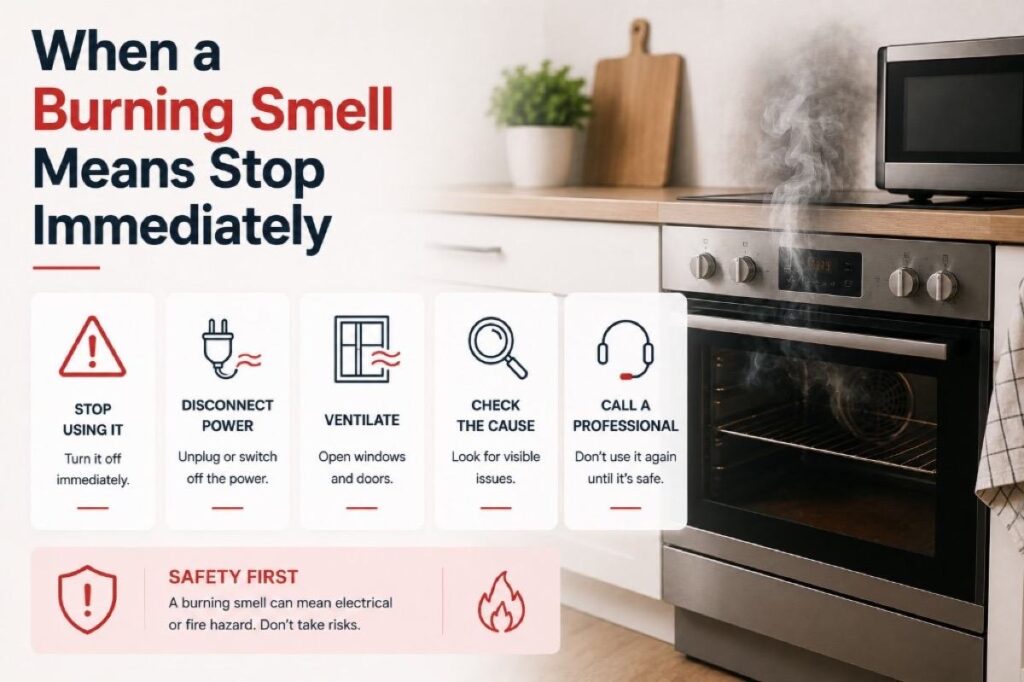
| Burning smell or damaged wiring |
Electrical fault |
Switch off at the breaker and stop using the appliance |
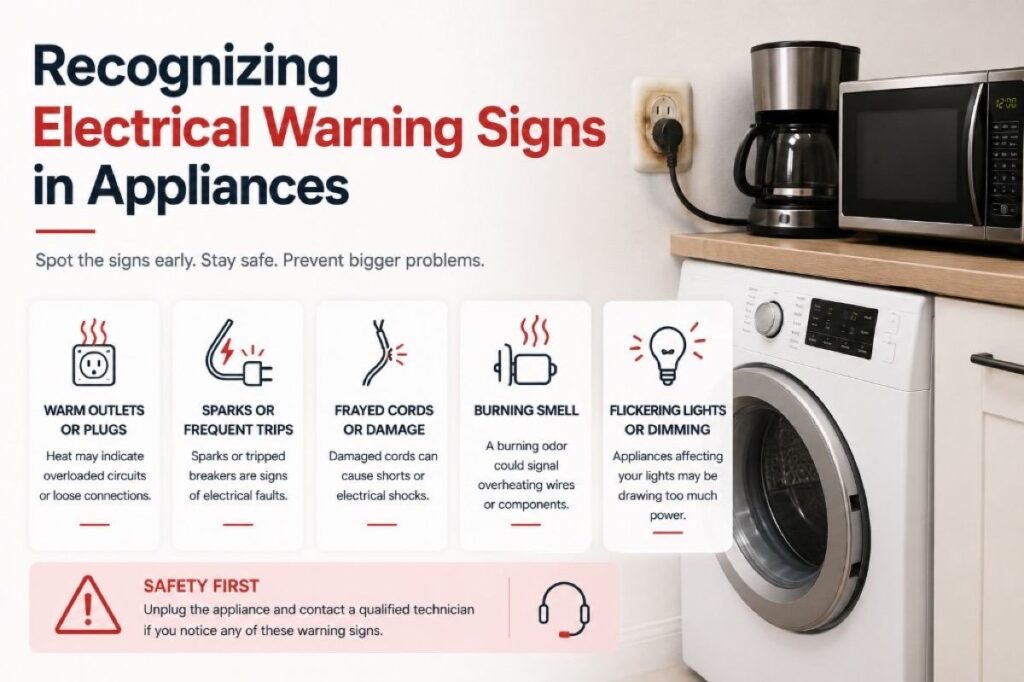
| Breaker that trips repeatedly |
A fault drawing too much current |
Do not keep resetting it; book a visit |
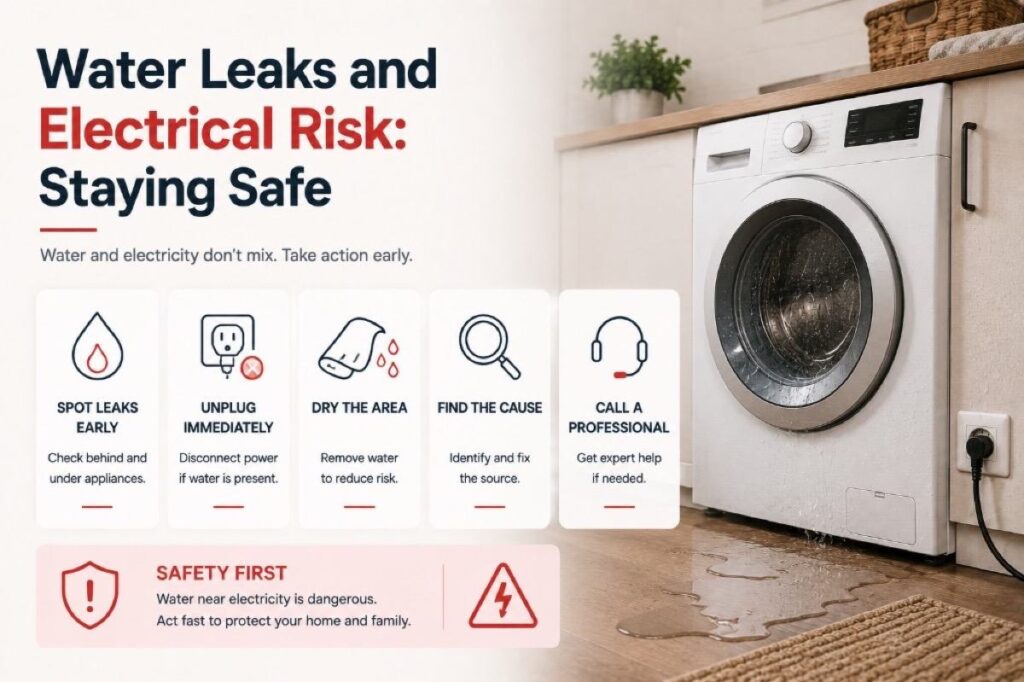
| Water on the floor near an outlet |
Leak plus live electricity |
Shut off the breaker and the water before approaching |
| Washer or dryer not working after a lock or fuse trouble |
A safety device acting |
Leave the lock or fuse alone |
| Microwave stops heating |
Internal high-voltage parts |
Do not open the wrapper; wipe-and-check items only |
Heat, gas, and sealed systems
Ranges, wall ovens, and dryers store heat and, on gas models, fuel. A smell of gas is not a “weak igniter” you keep clicking. Refrigerators hide refrigerant and oil; piercing a line to “add Freon” is how you destroy the cabinet and the room. Microwaves store a charge in the high-voltage capacitor after you unplug them.
What electrical limits do Whirlpool manuals set?
The manuals for many Whirlpool appliances call for a grounded outlet, no extension cord, and no removal of the ground prong. Washers often call for a dedicated circuit, and electric dryers use two breakers, so check both. If a breaker trips, reset it once. When the same breaker trips again, that is an electrician’s problem, not a reason to keep resetting.
Whirlpool’s dishwasher guidance adds three stop signs of its own: a burning smell, damaged wiring, and a breaker that trips repeatedly. For hard-wired units it says to schedule service if you are not comfortable removing panels, which is a fair standard for every appliance on this page.
The line people miss
Bypassing a lid lock so a washer will spin, jumpering a dryer thermal fuse, or taping a microwave door switch are not clever workarounds. Those devices exist because a spinning basket, a glowing element, and a magnetron are dangerous when the door is open.
Who should do gas work on an appliance?
Gas work belongs to a qualified installer. Manuals for gas ranges and dryers say gas leaks cannot always be detected by smell, and suppliers commonly recommend a listed gas detector. If you ever smell gas, do not operate switches, lighters, or phones near the appliance. Get everyone outside and contact your gas supplier or emergency services from there. Do not go back inside to look for the cause, and wait for the all-clear before using the appliance again.
Water next to an outlet is the same category. Unplug or kill the breaker. Do not mop with one hand and probe with a phone flashlight in the other.
Water and leaks
Whirlpool’s leak guidance is short: switch off the breaker, shut off the water, and do not run the dishwasher until the source is fixed. Whether the water comes from a gasket, a hose connection, or an inlet valve, none of those is a place to start unscrewing parts with the power on, and none of them is made safer by working quickly.
If you already started
If a panel is off and you are unsure how it goes back, leave it off, keep the appliance unplugged, and say so when you book. A technician would rather reassemble a cabinet than chase a fault you created by forcing a connector. Take a photo before you lose the screw map.
What can owners safely do?
The safe list is longer than people expect. Clean dishwasher filters and dryer lint screens, wipe gaskets and door boots, rinse hood grease filters, check that a refrigerator is level, and replace a water filter where the manual shows how. Scraping, leveling, and loading changes cost nothing and never require a tool behind a panel. When a task is not in the manual, treat it as off limits.
Ranges add one more owner check. Manuals call for the anti-tip bracket to be installed and engaged, so the range cannot tip forward when weight is placed on an open door. If you are not sure the bracket is in place, say so when you book instead of pulling the range out to look. Keep the area around any cooking appliance clear of combustibles and flammable vapors, and never leave a cooktop unattended while a burner is on.
Common questions
Is it safe to reset a tripped breaker?
Manuals advise resetting a tripped breaker once. If it trips again, stop and call an electrician or book service, because repeated trips point to a fault that resetting does not fix.
Can I clean a microwave myself?
Yes, the inside is meant to be wiped. Keep the cavity, the waveguide cover, and the door frame contact area clean so soil does not carbonize, and do not use abrasive pads or steel wool. Do not open the outer wrapper.
What if I smell gas?
Leave the area, avoid switches and flames, and contact your gas supplier or emergency services from outside. Do not try to find the leak yourself.