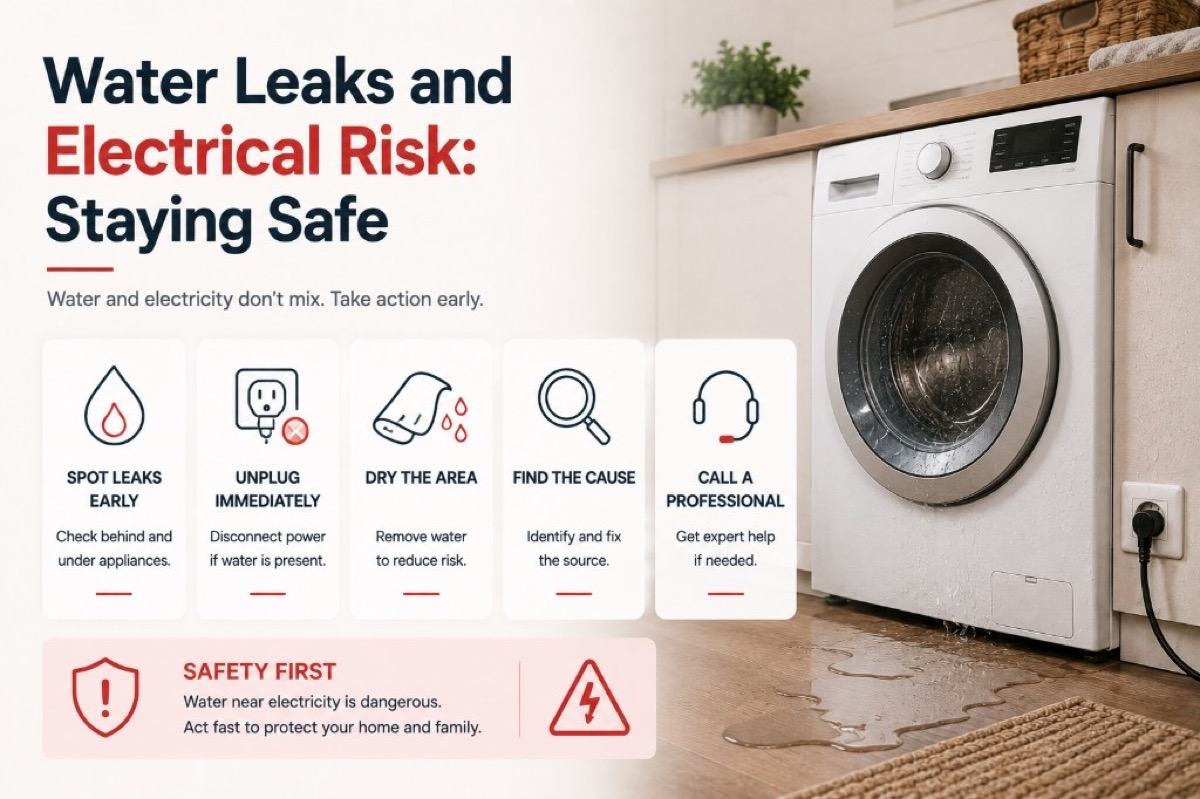
When an appliance leaks, cut power at the breaker and close the water valve before you touch anything or mop around it. The floor, any outlet nearby, and the appliance itself are all part of the same hazard until the circuit is off.
Laundry and kitchen appliances live next to receptacles on purpose. When a hose lets go, the water does not respect that plan. Standing on a wet floor and unplugging a dishwasher is how people get hurt. The sequence is breaker or shutoff first, then towels.
The order is breaker, water valve, then cleanup, and it applies whether the leak is a slow drip or a burst hose.
If water is at a range or dryer outlet, treat it with the same seriousness as a laundry leak. Those circuits are not gentle.
Where does the water come from, and what does it mean?
Where the water shows up points toward the source. The first move is the same either way: shut off power and water before you investigate.
| Where the water is |
What it can point to |
What you can safely check |
| Front of the dishwasher, near the door |
Door gasket, over-sudsing, or a spray arm issue |
Use only dishwasher detergent, and look at the gasket from outside |
| Bottom or center of the dishwasher |
Pump seal, sump, or overfilling |
Shut off power and water, then note how much collected |
| Behind or under the cabinet |
Hose connections, the inlet valve, or the drain line |
Check the shutoff valve and visible connections for drips |
| Under or around a washer |
A hose, the pump filter area, or suds from the wrong detergent |
Close the valves and confirm only the right detergent is used |
| At or near an outlet or cord |
Water reaching live wiring |
Do not touch; shut off the breaker first |
| Under a refrigerator |
A water line or filter housing issue |
Close the supply valve and catch the water |
What should you shut off when an appliance leaks?
Know the breaker for the dishwasher, washer, and refrigerator. Know the water valves under the sink and behind the washer. If you cannot reach the appliance valve because of the flood, the house shutoff is the next move. Manuals for Whirlpool dishwashers also say to close the under-sink water valve before working near the appliance.
In a flood, the order matters: breaker, then water, then towels. Do not step into standing water to reach a panel. If the panel is out of reach, call for help rather than wade in.
How do you read where a leak is coming from?
Whirlpool’s dishwasher guidance describes where a leak points. Water at the front or door area suggests the gasket, over-sudsing, or a spray arm. Water at the bottom or center suggests the pump seal, the sump, or overfilling. Water behind or under the cabinet suggests the hose connections, the inlet valve, or the drain line.
That map is a way to give the visit a head start, not a diagnosis you can finish yourself. If a leak continues after a gasket was replaced and the unit was leveled, the guidance treats it as a job for a technician.
Do not mop and probe
Standing water changes the risk of every small task, so the safe move is to stop and make the circuit dead before anything else.
Do not reach into a dishwasher kickplate or a washer pump while the machine might still be live. Do not use a shop-vac on standing water around an outlet unless the circuit is off. Phones as flashlights still involve a person kneeling in water.
Water near a receptacle, cord, or range outlet
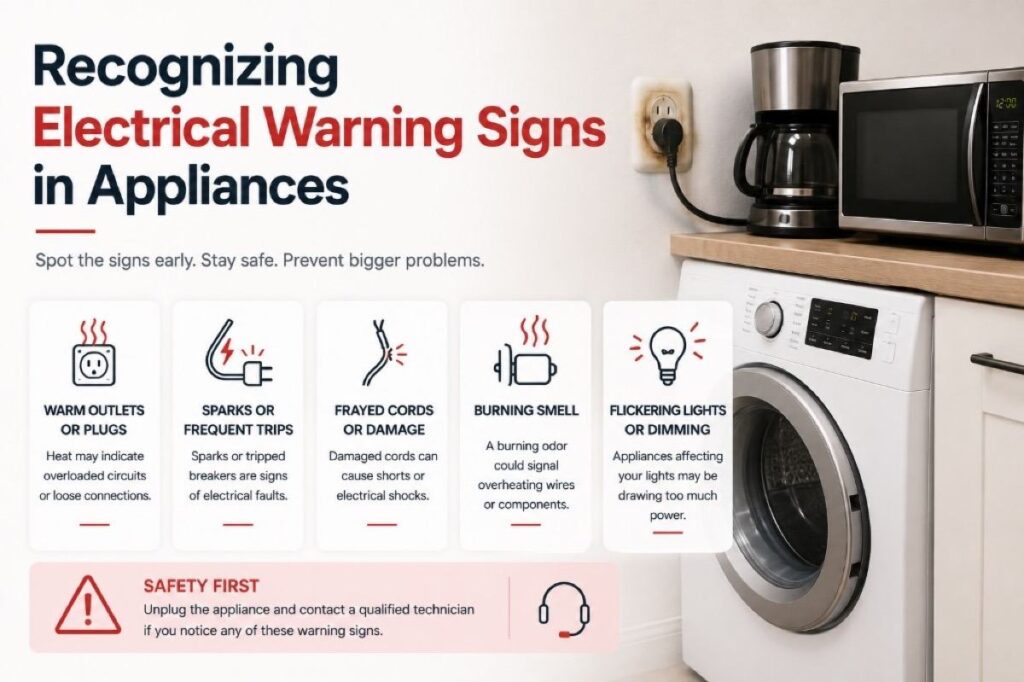
Water and wiring do not need contact for a hazard to exist. A damp receptacle behind a washer, a wet floor under a dryer cord, or water running toward a range outlet all call for the same first step: switch off the breaker that feeds that circuit, from a dry spot. Manuals for Whirlpool washers call for a grounded outlet and no extension cord, which also means cords should not sit in a puddle.
If a breaker trips while water is involved, do not keep resetting it. One reset is what the manuals describe, and if the problem continues, an electrician is the right call, not another try.
After the floor is dry
A one-time drip from a loose dishwasher supply that you tightened is worth watching. Recurring leaks, rust at a receptacle, or a breaker that tripped during the flood are visit-worthy. Say where the water went — toe kick, outlet, neighbor’s ceiling — because that changes whether the appliance or the house needs attention first. Whirlpool’s own guidance says not to run the dishwasher again until the source of the leak is fixed.
How do you prevent the next dishwasher leak?
Use only dishwasher detergent, never dish soap, and level the dishwasher side to side and front to back.
Several causes the manufacturer lists are habits rather than faults. Use only dishwasher detergent, never dish soap, because suds can push water out around the door. Level the dishwasher side to side and front to back. On washers, use only HE detergent where the manual calls for it, since excess suds cause leaking and drainage problems. Check visible hoses and the shutoff valves for drips whenever the appliance is pulled out.
Some Whirlpool dishwashers include a leak-detection feature that flashes a light and drains the tub. Whether yours does depends on the model, so check the manual.
Frequently asked questions
Should I unplug a leaking appliance?
Not while you are standing in water. Shut off the breaker first, then close the water valve. Once the floor is dry and the circuit is off, you can unplug it.
Can I run the dishwasher again after a leak?
Whirlpool’s guidance says not to run it until the source of the leak is fixed. If you tightened a loose supply and the leak does not return, watch it closely, and book a visit if it recurs.
When does a leak need a visit rather than a fix at home?
If it recurs, if rust appears at a receptacle, if a breaker tripped during the leak, or if the leak continues after a gasket was replaced and the unit leveled. Tell the visit where the water went, because that decides whether the appliance or the house needs attention first.