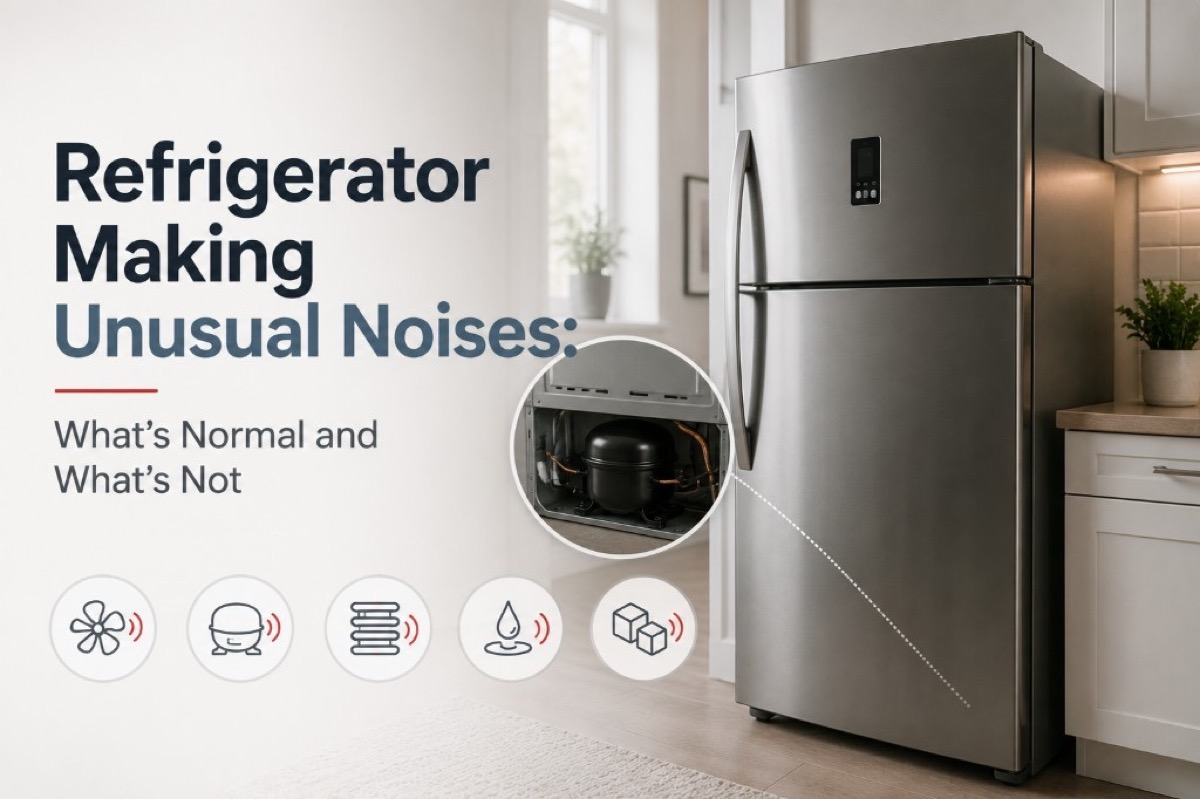
Humming, clicking, gurgling, and the occasional pop are normal refrigerator sounds. A noise deserves attention when it is new, when it grinds or squeals, or when it shows up alongside warmer food. Check that the cabinet is level and nothing is rattling on top first, and book a visit if a harsh sound keeps going or comes with cooling loss.
A refrigerator is a compressor, two or three fans, and refrigerant moving through pipes. It is allowed to sound like a machine. The useful skill is noticing a new noise that arrived with a temperature change, not chasing every pop when the defrost heater finishes.
Pull the cabinet a few inches from the wall only if you can do it without kinking the water line or tipping the box. Leveling feet that were never wound down are a common rattle source.
Which refrigerator sounds are normal?
Humming, clicking, gurgling, and the odd pop are ordinary. A noise deserves a closer look when it is new, grinds or squeals, or arrives with warmer food.
| Symptom |
What it can point to |
What you can safely check |
| Steady hum, fan swooshing |
Compressor and fans running normally |
Nothing to do; this is the ordinary background of a running refrigerator |
| Clicking, then a pause |
Relays switching on and off |
Listen for whether it repeats with warm food or only at the start of a cycle |
| Gurgling or trickling |
Refrigerant moving, or defrost water draining |
Normal on many models; note it only if it comes with a puddle |
| Popping or cracking |
Walls and liners expanding and contracting |
Normal as temperatures change |
| Rattling or vibration |
Unlevel cabinet, or items resting on top |
Level the front legs and secure anything on top |
| Chattering while dispensing water |
A kinked water line |
Check that the cabinet was not pushed back onto the line |
| Grinding or squeaking when a door opens |
A door rubbing |
Look at the door edges and the floor for rubbing contact |
The soundtrack of a healthy fridge
A low hum, occasional clicks as relays open, and trickling after the ice maker fills are ordinary. Plastic liners pop as they change temperature. None of that needs a part.
Are water sounds from a refrigerator normal?
A refrigerator with an ice maker or water dispenser has a water valve, and the valve makes noise. Whirlpool lists a buzz or click during fill and dispensing as normal, along with a thump in the water line when the ice maker fills. Hissing or dripping during a defrost cycle is also normal, because the defrost heater melts frost off the evaporator and the meltwater drains away.
One related case is worth knowing. On a model with an ice maker that is switched on but not connected to water, the valve can buzz, and the ice maker can over-chill the refrigerator. Turning the ice maker off, using the control the manual describes, ends that noise.
Rattles you can stop in a minute
Wine bottles touching the back wall, a drip pan that is not seated, and a refrigerator that rocks on uneven floors make noises that sound expensive. Clear the top, check the feet, and make sure the ice bin is fully in its rails.
Can an unlevel refrigerator cause noise?
The product guidance for Whirlpool refrigerators names an unlevel cabinet as a cause of rattling and vibration. A bubble level on the shelf, then small turns of the front legs, is the manual method. Level side to side matters as much as front to back, and a cabinet that rocks slightly when you press a corner is not resting on all of its feet.
A grinding or squeaking sound that happens only when you open the door usually has to do with the door rubbing, not with the cooling parts. Check that the door clears the cabinet edges, the floor, and a freezer drawer that is sticking out. Also notice whether the sound followed a move, because pushing the cabinet back can pinch a water line.
Coils, clearance, and heat
The manuals list keeping the coils clean among the fixes for fan and compressor noise, with a caveat: not every model needs coil cleaning, and on some it is a technician-only job. Where the manual describes it, the job is vacuuming the base grille area with a soft brush while the power is off, taking care not to bend fins or disturb water lines. Never go past the grille into the machinery.
Placement matters as well. Whirlpool says not to install a refrigerator near an oven, a radiator, or another heat source, behind a cabinet door, or with the base grille blocked. A cabinet that is starved for air runs longer, and a longer-running compressor and fan are simply easier to hear.
Which refrigerator sounds call for a visit?
Grinding from the freezer, a squeal that tracks with cooling loss, or a compressor that rapid-fires then stays silent belongs on a service note. Do not oil a fan through the rear cover. If you smell electrical burning, unplug the refrigerator if the cord is reachable.
Noticing the useful pattern
Sound alone rarely tells you the whole story, so pair it with temperature. A louder fan with food staying cold is a small question. A loud sound with warm milk and soft ice cream is a bigger one. Keep air vents clear of food, as the manuals ask, because blocked vents can make a fan work harder and change what you hear.
Common questions
Can a new refrigerator be noisy for the first day?
A newly installed refrigerator needs time to cool down, and Whirlpool says to allow 24 hours before judging temperatures. Fans and the compressor run more during that stretch, so the sound level early on tells you little about how it will behave later.
Why does my refrigerator click every so often?
Clicking is usually a relay opening or closing as the compressor or a fan starts and stops. Whirlpool lists it among normal sounds, so only a click that repeats nonstop with warm food is worth a closer look.
Is gurgling a sign that something is leaking?
Gurgling is listed as normal and is usually refrigerant or defrost water moving through the system. A puddle on the floor is the sign that points to a water problem.
Why does the refrigerator buzz when the ice maker fills?
The water inlet valve buzzes or clicks while it opens to fill the ice maker or dispense water. That is described as normal in the manuals, as long as water actually arrives.